
How to Make Matcha: The Simple Classic Method (Usucha)
Sift, measure 2 g, pour water at 70–80 °C and whisk for 20 seconds: the classic way to make a smooth, frothy matcha at home, even without a bamboo whisk.
What you need
- 2 g matcha (1 level teaspoon or 2 heaped bamboo scoops)
- 60–80 ml water at 70–80 °C
- 1 wide bowl (chawan or cereal bowl)
- 1 bamboo whisk (chasen) or a milk frother
- 1 small fine-mesh sieve
Preparation
- Heat the water, then let it cool to 70–80 °C (3–5 minutes after boiling)
- Pour a little hot water into the bowl, dip the whisk in to warm it, then empty the bowl
- Sift 2 g of matcha straight into the dry bowl
- Add 60–80 ml of water at 70–80 °C
- Whisk briskly in an M or W shape for 15–20 seconds without pressing on the bottom
- Lift the whisk to the surface to refine the foam, then drink right away
To make good matcha, sift 2 g of powder (about one teaspoon) into a bowl, add 60–80 ml of hot water at 70–80 °C, never boiling, and whisk in a zigzag for 15–20 seconds until a fine foam forms. This is the classic preparation known as usucha, or "thin tea". It takes three minutes and needs very little equipment.
Why technique matters so much
Matcha isn't steeped and strained like other teas: you drink the whole leaf, ground into an ultra-fine powder. Everything that goes into the bowl ends up in your cup. Water that's too hot, poorly dissolved powder or a rough measurement shows up straight away. Get the basics right, though, and matcha reveals a soft, vegetal sweetness and a velvety texture that surprises people who expected it to be bitter.
In Morocco we know all about ritual from mint tea: the right teapot, the right pouring height, the foam on top. Matcha has its own ritual too, shorter but just as precise.
Water temperature: secret number one
This is the most common mistake. Boiling water scorches the powder and brings out bitterness. Aim for 70–80 °C. No thermometer? Two easy tricks:
- boil the kettle, then wait 3–5 minutes before pouring;
- or mix one quarter cold water with three quarters boiling water and you'll land in the right range.
If your tap water is very hard, a low-mineral bottled water gives a cleaner taste.
The right amount
For usucha, use 2 g of matcha: two heaped scoops with a bamboo spoon (chashaku), or one level teaspoon. Our organic matcha powder comes in a 100 g pouch, which makes around 50 cups. If you're new to matcha, start at 1.5 g and adjust to taste.
The whisking motion
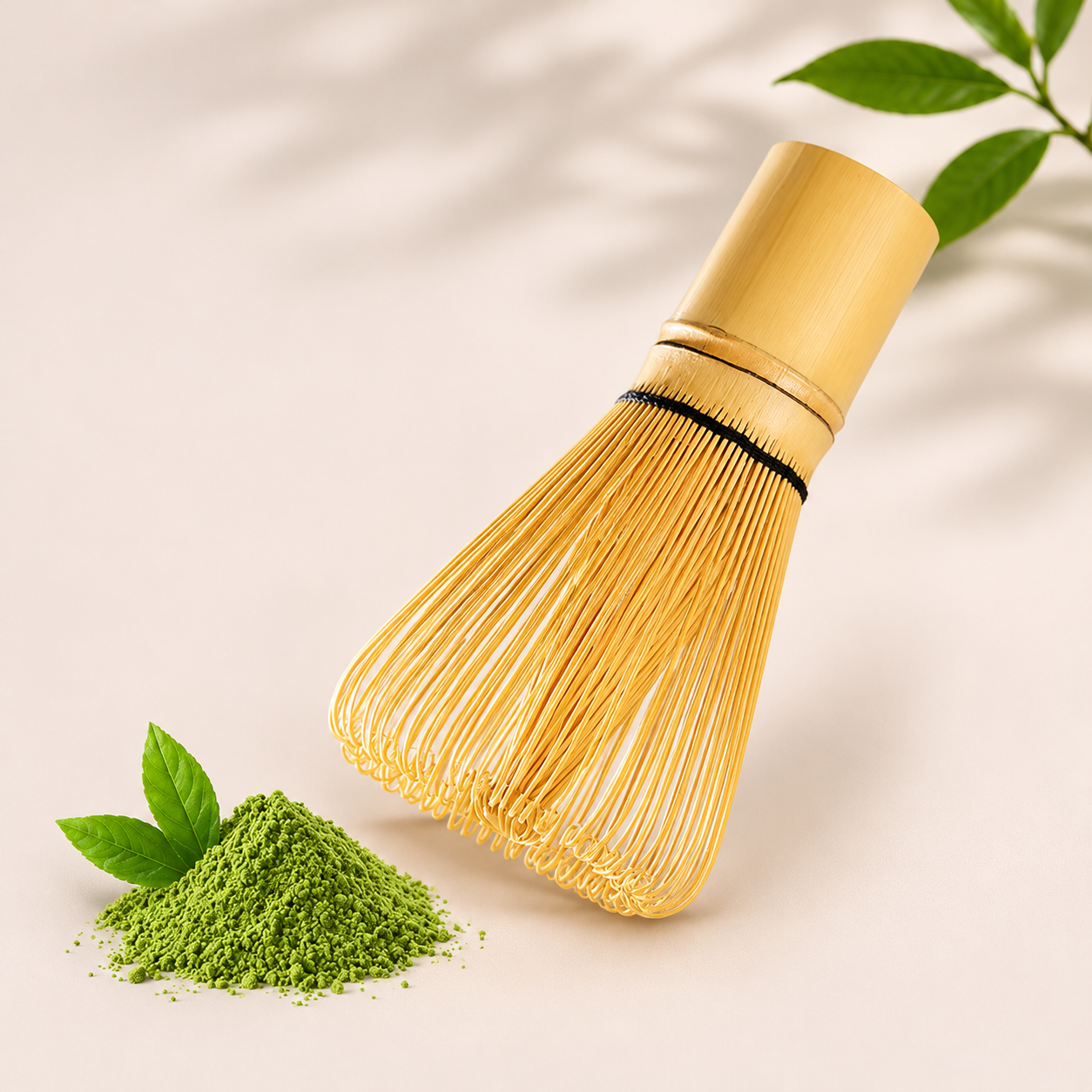
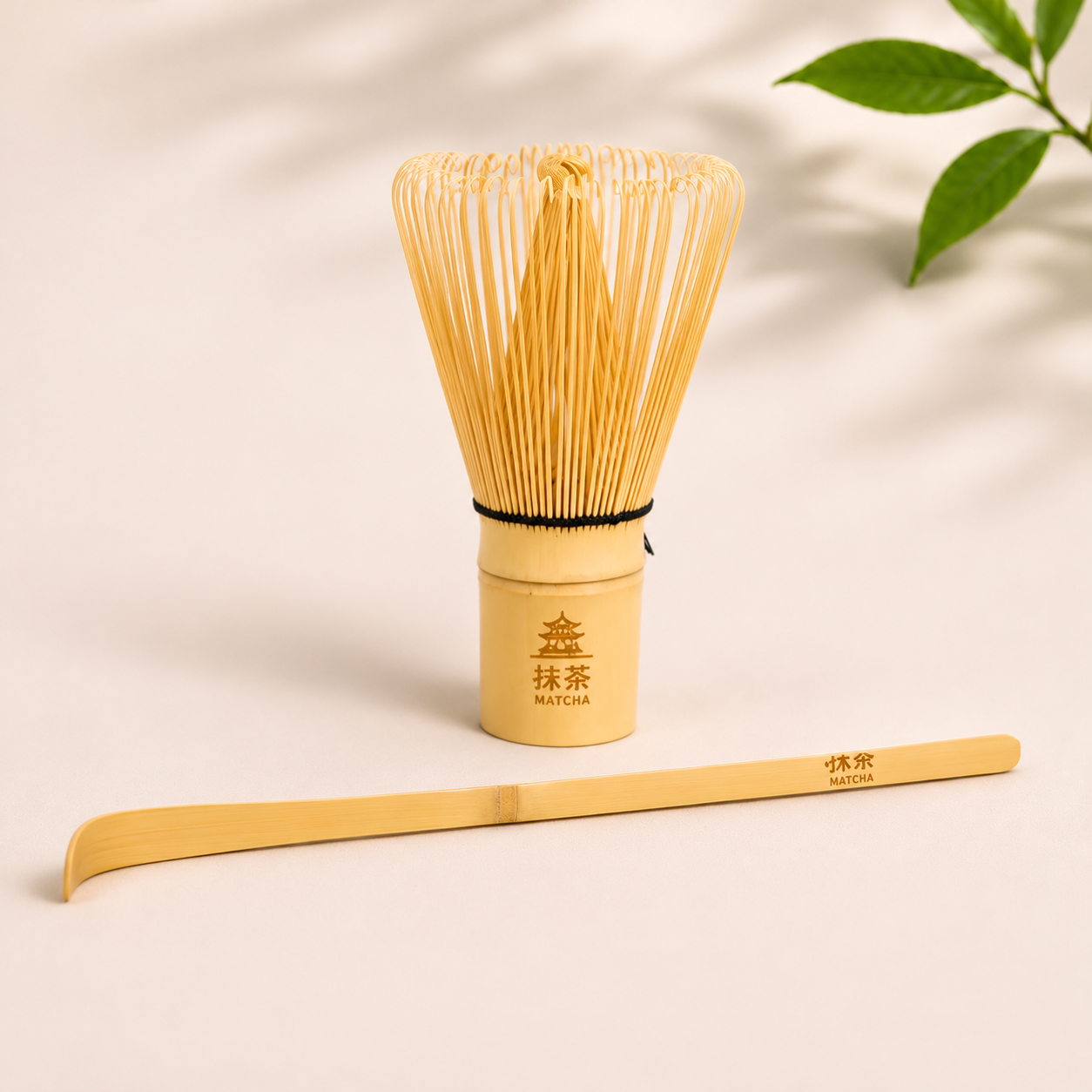
A bamboo whisk, or chasen, has around a hundred fine tines that work air into the tea. Don't whisk in circles: draw quick M or W shapes back and forth, moving from the wrist rather than the arm. The whisk should brush the bottom of the bowl without pressing on it. After 15–20 seconds, slowly lift the whisk to the surface to break up the last large bubbles. The goal is a pale, dense foam with no big bubbles.
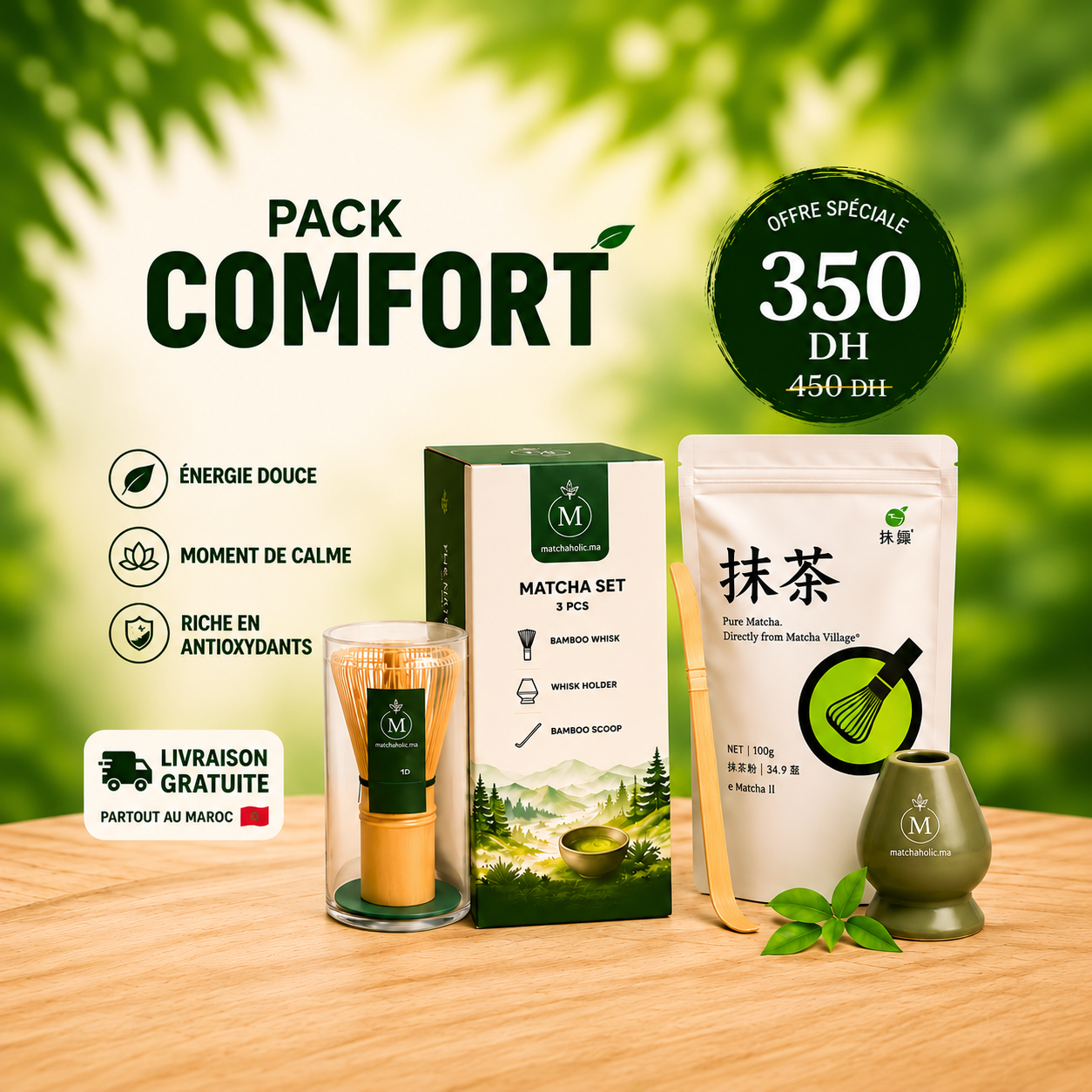
Before first use, soak your bamboo whisk in lukewarm water for a few minutes to soften the tines. Starting from scratch? The scoop and whisk set brings together the two essential tools.
No chasen? Alternatives that work
Don't have a traditional whisk yet? No problem.
- Electric milk frother: dip it in the bowl for a few seconds. The foam will be slightly less fine but perfectly good.
- Shaker or sealed jar: add the sifted powder and warm water, close tightly and shake hard for 20 seconds. Great for the office.
Whatever you use, sifting is still essential to avoid lumps.
The most common mistakes
- Boiling water: the matcha turns bitter and loses its bright green colour.
- Unsifted powder: lumps stick to the bottom and the flavour is uneven.
- Too much powder: stronger isn't better, it's just harsher. Stay around 2 g.
- Too much water: beyond 100 ml, matcha tastes flat and the foam won't hold.
- Circular whisking: you mix without aerating, so you get little foam.
Tasting tips
Drink your matcha within two or three minutes, before the powder settles. Try it plain first: good matcha doesn't need sugar. It pairs nicely with a date, a few almonds or a small treat in the afternoon. A 2 g cup contains roughly 60–70 mg of caffeine, about the same as an espresso, but combined with L-theanine it gives a calmer, steadier kind of energy.
If you'd like something more indulgent, try our homemade matcha latte, and to pick the right powder, read our guide on how to choose your matcha.
Storing your matcha
Matcha dislikes air, light, heat and moisture. Seal the pouch carefully after each use and keep it somewhere cool and dark. During the Moroccan summer the fridge is a good option, as long as you let the pouch come back to room temperature before opening it to avoid condensation. Ideally, finish it within two months of opening to enjoy its colour and aroma at their best.
Matchaholic offers free delivery anywhere in Morocco in under 48 hours, with cash on delivery, and our team answers your questions on WhatsApp 7 days a week.
FAQ
How much matcha should I use per cup?
Use 2 g of matcha, about one level teaspoon, for 60–80 ml of water. Beginners can start with 1.5 g.
Can I make matcha with boiling water?
No, boiling water makes matcha bitter. Use water at 70–80 °C, for example by waiting 3–5 minutes after the kettle boils.
How do I make matcha without a bamboo whisk?
An electric milk frother or a sealed jar shaken for 20 seconds both work well. Just sift the powder first to avoid lumps.
Why does my matcha have lumps?
Matcha is a very fine powder that clumps easily. Always sift it and whisk in a zigzag rather than in circles.
For this recipe
What we use
Blog
Read next
Matcha and weight loss: what's true and what's exaggerated
Matcha will not make you lose weight on its own. Its real strength is replacing sodas, frappés and very sweet teas with a sugar-free drink. Here are the facts versus the hype.
Does matcha keep you awake? Caffeine, timing and tips
A cup of matcha contains 60 to 70 mg of caffeine, which stays active for several hours. Here is when to stop and how to enjoy it without ruining your nights.
Drinking matcha on an empty stomach: good or bad idea?
Matcha on an empty stomach suits some people and makes others queasy. It all depends on your stomach: here is how to enjoy it in the morning without discomfort.