
Drinking matcha on an empty stomach: good or bad idea?
Matcha on an empty stomach suits some people and makes others queasy. It all depends on your stomach: here is how to enjoy it in the morning without discomfort.
Drinking matcha on an empty stomach is neither good nor bad in itself: it mostly comes down to personal tolerance. Plenty of people drink it first thing without any trouble, but for sensitive stomachs, catechins and caffeine can cause discomfort or even nausea. If that sounds like you, have it after a small snack, with milk, or simply more diluted.
Why does matcha bother some people on an empty stomach?
Matcha is not steeped and removed like regular tea: you drink the whole leaf, ground into powder. That means you take in all of its compounds, including catechins, antioxidants naturally found in green tea, and about 60 to 70 mg of caffeine per 2 g cup. On an empty stomach these can feel stronger: a slight burning sensation, cramps, passing nausea or a knotted feeling.
It does not happen to everyone. Some people feel nothing at all, while others react from the first sip. Concentration matters too: a very strong matcha, with 3 or 4 g of powder in very little water, is harder on an empty stomach than a light, well-whisked cup.
If you have a known digestive condition (reflux, gastritis, ulcer) or are on medication, ask your doctor before making it a morning habit.
How to tell whether your stomach can handle it
Run a simple test over a few days:
- Make a light cup: 1 to 1.5 g of matcha in 80 to 100 ml of water at 70–80 °C.
- Sip it slowly when you wake up, without eating.
- Notice how you feel over the next hour.
- If all is well, gradually move up to the standard 2 g.
If you feel any discomfort, there is no need to push through: just change the timing or the recipe.
Ways to make your morning gentler
- A small snack first: a date, a few almonds, a slice of wholegrain bread with a little amlou or cream cheese. Even a few bites often prevent discomfort.
- Milk: a homemade matcha latte, with dairy or plant milk, is usually far easier to tolerate than plain matcha.
- Dilution: more water, slightly less powder. It still tastes good and the effect is more gradual.
- The right water temperature: boiling water makes matcha more bitter and harsher. Stay between 70 and 80 °C, as explained in our guide on how to prepare matcha.
When is the best time to drink matcha?
For most people, morning and late morning remain ideal. Caffeine helps you get going, and L-theanine combined with caffeine gives a calmer, steadier energy than a coffee gulped on the run. Many enjoy their cup around 10 am, after breakfast, just as the first dip in energy hits at the office or at university.
If you are sensitive to caffeine, avoid drinking it too late: our article on matcha and sleep explains the cut-off time to keep in mind.
During Ramadan the question is different, since the whole day is spent fasting. Matcha is then enjoyed at iftar or suhoor, alongside a meal, which is actually a gentle setup for the stomach.
Matcha, empty stomachs and iron
Some studies suggest tea compounds may reduce iron absorption when taken with meals. Drinking matcha a little apart from breakfast can therefore make sense if you are watching your iron intake. A good compromise: a small snack, then matcha a bit later. If you have a deficiency or any doubt, talk to your doctor.
The right tools for a light cup
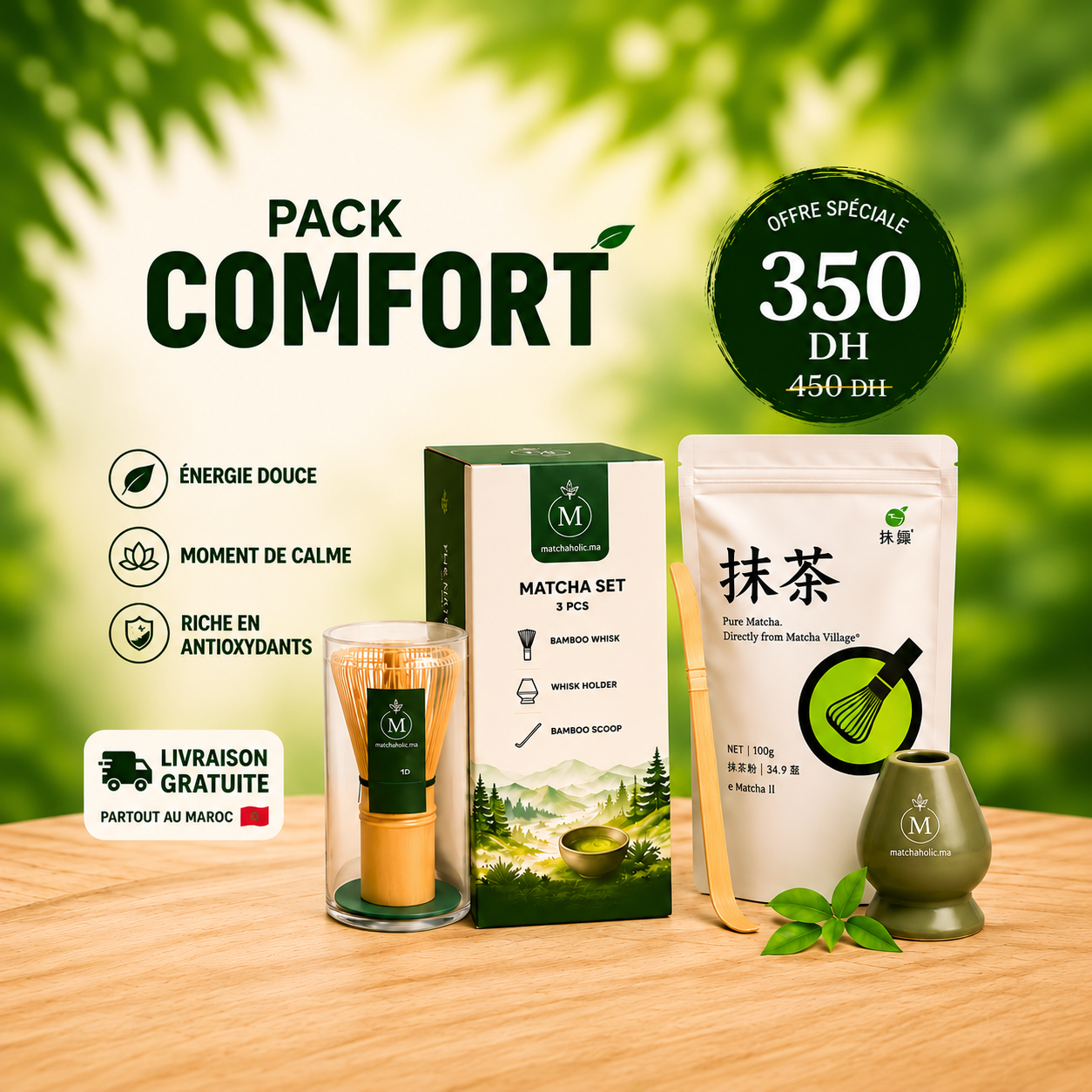
To measure a light cup easily, a bamboo scoop and whisk really help: you get a fine, lump-free foam that is more pleasant to drink. The Comfort Pack 100 g with kit brings together the pouch and the starter accessories, and our organic matcha powder is also sold on its own in a 100 g pouch, about 50 cups. Prices are shown on each product page and may change.
In short
- Matcha on an empty stomach: fine if your stomach handles it well.
- Sensitive stomach: small snack first, a milky version or a lighter dose.
- Best time: morning or late morning, not too late in the day.
- Digestive issues or medication: ask your doctor.
To work out how many cups to have in total, see our guide on how much matcha to drink per day.
FAQ
Is it bad to drink matcha on an empty stomach?
Not necessarily: many people tolerate it very well. In sensitive stomachs, catechins and caffeine can cause discomfort or nausea, and a small snack beforehand is often enough.
Why does matcha make me feel sick in the morning?
On an empty stomach, matcha's catechins and caffeine can feel stronger. Try a lighter dose, a milky version, or drink it after eating a little.
Should I drink matcha before or after breakfast?
For most people, after a small snack or mid-morning is the most comfortable. Drinking it a little apart from meals may also help with iron absorption.
Is a matcha latte gentler on the stomach?
Yes, milk or plant milk generally softens matcha and makes it easier to tolerate on an empty stomach. Just avoid adding too much sugar.
For this recipe
What we use
Blog
Read next
Matcha and weight loss: what's true and what's exaggerated
Matcha will not make you lose weight on its own. Its real strength is replacing sodas, frappés and very sweet teas with a sugar-free drink. Here are the facts versus the hype.
Does matcha keep you awake? Caffeine, timing and tips
A cup of matcha contains 60 to 70 mg of caffeine, which stays active for several hours. Here is when to stop and how to enjoy it without ruining your nights.
Matcha during pregnancy and breastfeeding: caffeine and care
A cup of matcha contains 60 to 70 mg of caffeine. During pregnancy and breastfeeding, the EFSA reference is 200 mg a day from all sources. Here is how to keep track.