
Matcha vs Moroccan mint tea: what's the difference?
Matcha and Moroccan mint tea come from the same plant, but they are made, sweetened and enjoyed very differently. Leaf, caffeine, sugar, taste and ritual compared.
Matcha and Moroccan mint tea are both green tea, made from the same plant, Camellia sinensis. The key difference: with matcha you drink the whole leaf ground into powder, whereas mint tea is an infusion of gunpowder tea whose leaves stay in the pot. So matcha has more caffeine per cup and is usually drunk unsweetened, while mint tea remains the drink of sharing and hospitality.
Is it really the same plant?
Yes. Green tea, black tea, matcha and gunpowder all come from the tea plant. What changes is how it is grown, processed and prepared. The tea used for Moroccan mint tea is usually a Chinese gunpowder green tea: leaves rolled into small pellets, steeped with fresh spearmint (nana) and sugar.
Matcha comes from Japan. The tea bushes are shaded for a few weeks before harvest, which deepens the bright green colour and the sweetness of the leaves. They are then dried, stripped of stems and veins, and stone-ground or milled into a very fine powder.
Infusion or whole leaf: why does it matter?
When you make mint tea, the water extracts part of what is in the leaves, and the leaves stay behind in the teapot. With matcha, you whisk the powder into the water: nothing is thrown away, you consume everything the leaf contains. That is why matcha is considered richer in antioxidants per cup than steeped green tea.
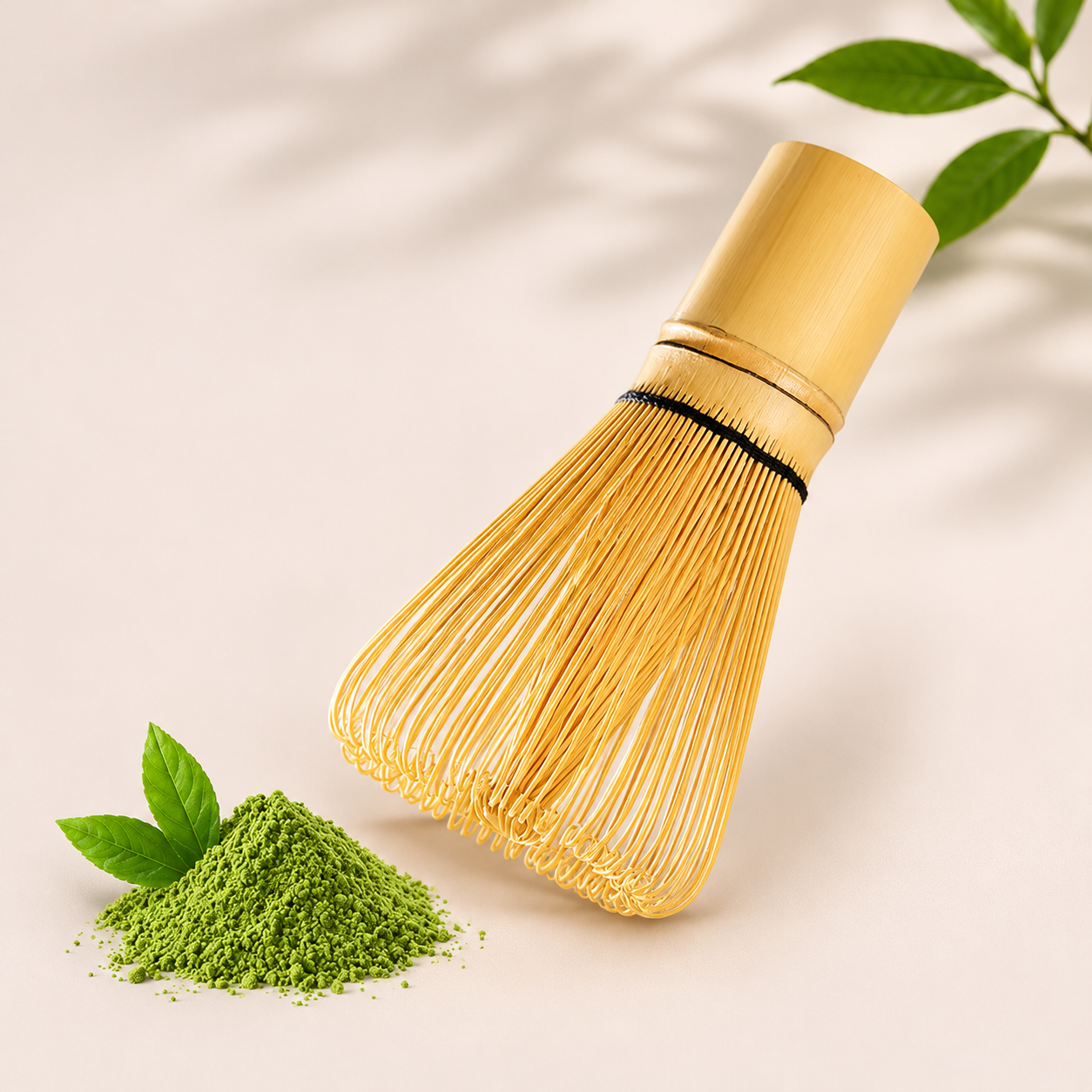
The texture is different too. Mint tea is clear and fragrant, with its foam created by pouring from a height. Matcha is opaque and velvety, with a fine froth made with a bamboo whisk.
Which has more caffeine?
A glass of steeped green tea, like the gunpowder tea in mint tea, contains around 20 to 40 mg of caffeine depending on the amount of tea and steeping time. A 2 g cup of matcha contains 60 to 70 mg, because you drink the whole leaf. But habits matter: few people stop at one glass of mint tea. Three or four glasses over an afternoon can add up to as much caffeine as one or two cups of matcha. To find your own balance, read our guide on how much matcha per day.
What about sugar?
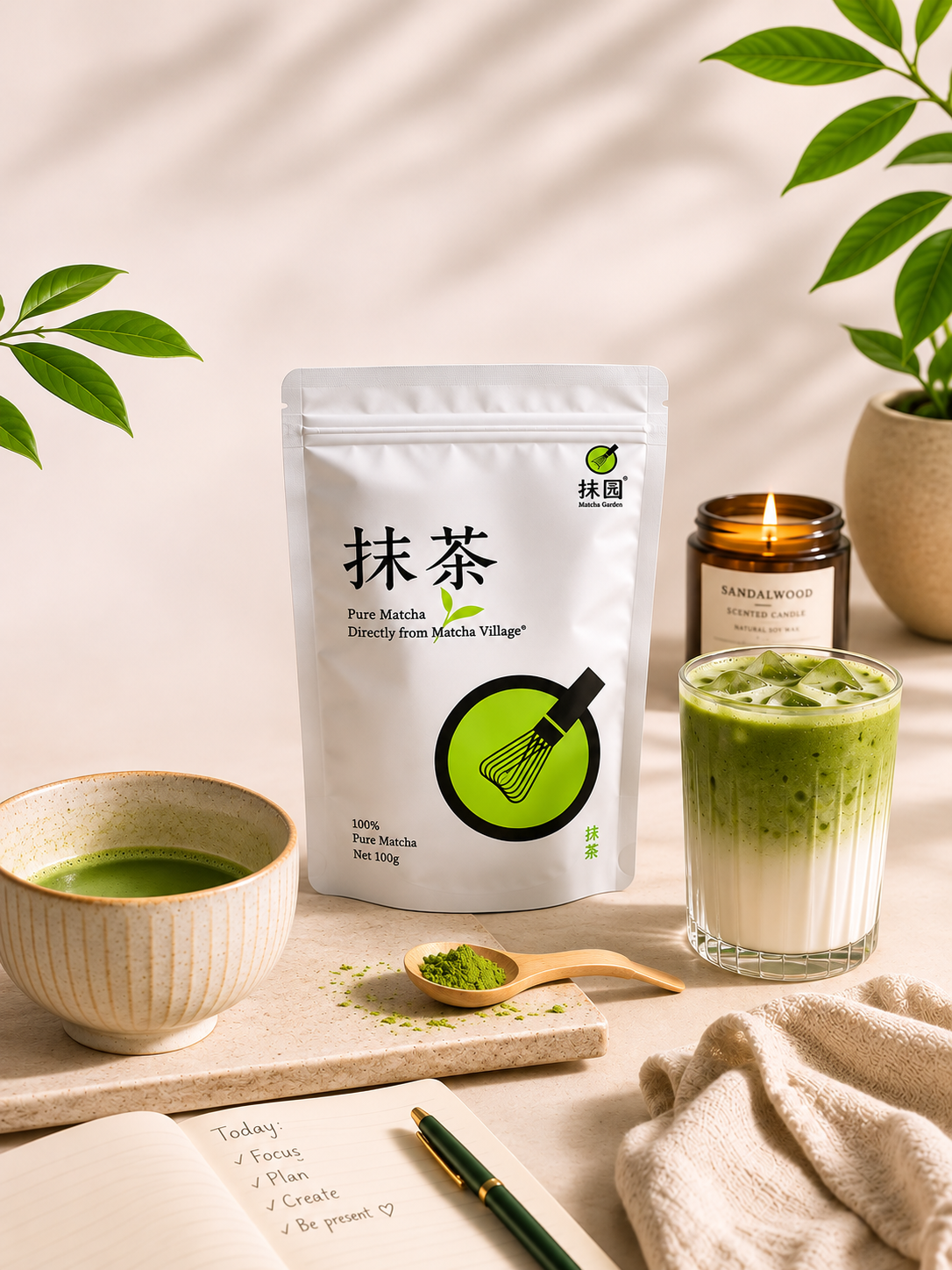
This is often the biggest everyday difference. Traditional mint tea is generally well sweetened, sometimes very sweet depending on the family and region. Matcha, on the other hand, is drunk plain: good matcha has a natural vegetal sweetness and does not need sugar. Our organic Pure Matcha is 100% matcha, with no sugar and no additives. If you are trying to cut down on sugar, swapping one or two glasses of sweet tea for a plain matcha is an easy change.
Taste, ritual and timing
Mint tea tastes fresh and sweet, with a light bitterness from the tea and the strong aroma of nana. Matcha has a more vegetal, rounded flavour with an umami note, and can turn slightly bitter if the water is too hot.
The rituals are different but equally beautiful. Mint tea means the metal teapot, decorated glasses, pouring from a height, a moment shared with family, guests or after a meal. Matcha is more personal: a bowl, a whisk, three minutes of preparation, often in the morning or when you sit down to work. They complement each other well: matcha to start the day, mint tea for moments together.
Can you combine matcha and mint?
Absolutely, and it is delicious. Steep a few fresh nana leaves in hot water, then whisk the matcha into it for a drink that feels both familiar and new. In summer, the iced version is especially refreshing. Try our matcha with nana mint recipe, and for the basics, our guide on how to prepare matcha.
The idea is not to replace mint tea, which is part of Moroccan heritage, but to add another way to enjoy green tea.
In short
Matcha first, mint tea second:
- Plant: Camellia sinensis / Camellia sinensis
- Usual origin: Japan / gunpowder tea from China
- Form: whole leaf powder, fully consumed / infusion, leaves left behind
- Caffeine: 60 to 70 mg per cup / about 20 to 40 mg per glass
- Sugar: usually none / often a lot
- Taste: vegetal, rounded, umami / fresh, minty, sweet
- Ritual: bowl and whisk, a personal moment / teapot and glasses, a shared moment
- Best time: morning, work, workouts / after meals, guests, family
Matchaholic delivers free anywhere in Morocco, with cash on delivery: an easy way to put a bowl of matcha next to the teapot.
FAQ
Do matcha and mint tea come from the same plant?
Yes, both are green tea from Camellia sinensis. Matcha is a powder made from shaded Japanese leaves, while Moroccan mint tea is an infusion of gunpowder tea with fresh mint.
Which tea has more caffeine?
A 2 g cup of matcha contains about 60 to 70 mg of caffeine, compared with 20 to 40 mg for a glass of steeped green tea. Several glasses of mint tea can still add up to a cup of matcha.
Can you mix matcha and mint?
Yes. Steep a few nana leaves in hot water, remove them, then whisk the matcha into the scented water. The iced version is perfect in summer.
Is matcha drunk sweet like mint tea?
Traditionally, no. Good matcha has a natural sweetness and is enjoyed plain; in a latte, a little honey or a few dates are enough if you like it sweet.
For this recipe
What we use
Blog
Read next
Matcha and weight loss: what's true and what's exaggerated
Matcha will not make you lose weight on its own. Its real strength is replacing sodas, frappés and very sweet teas with a sugar-free drink. Here are the facts versus the hype.
Does matcha keep you awake? Caffeine, timing and tips
A cup of matcha contains 60 to 70 mg of caffeine, which stays active for several hours. Here is when to stop and how to enjoy it without ruining your nights.
Drinking matcha on an empty stomach: good or bad idea?
Matcha on an empty stomach suits some people and makes others queasy. It all depends on your stomach: here is how to enjoy it in the morning without discomfort.